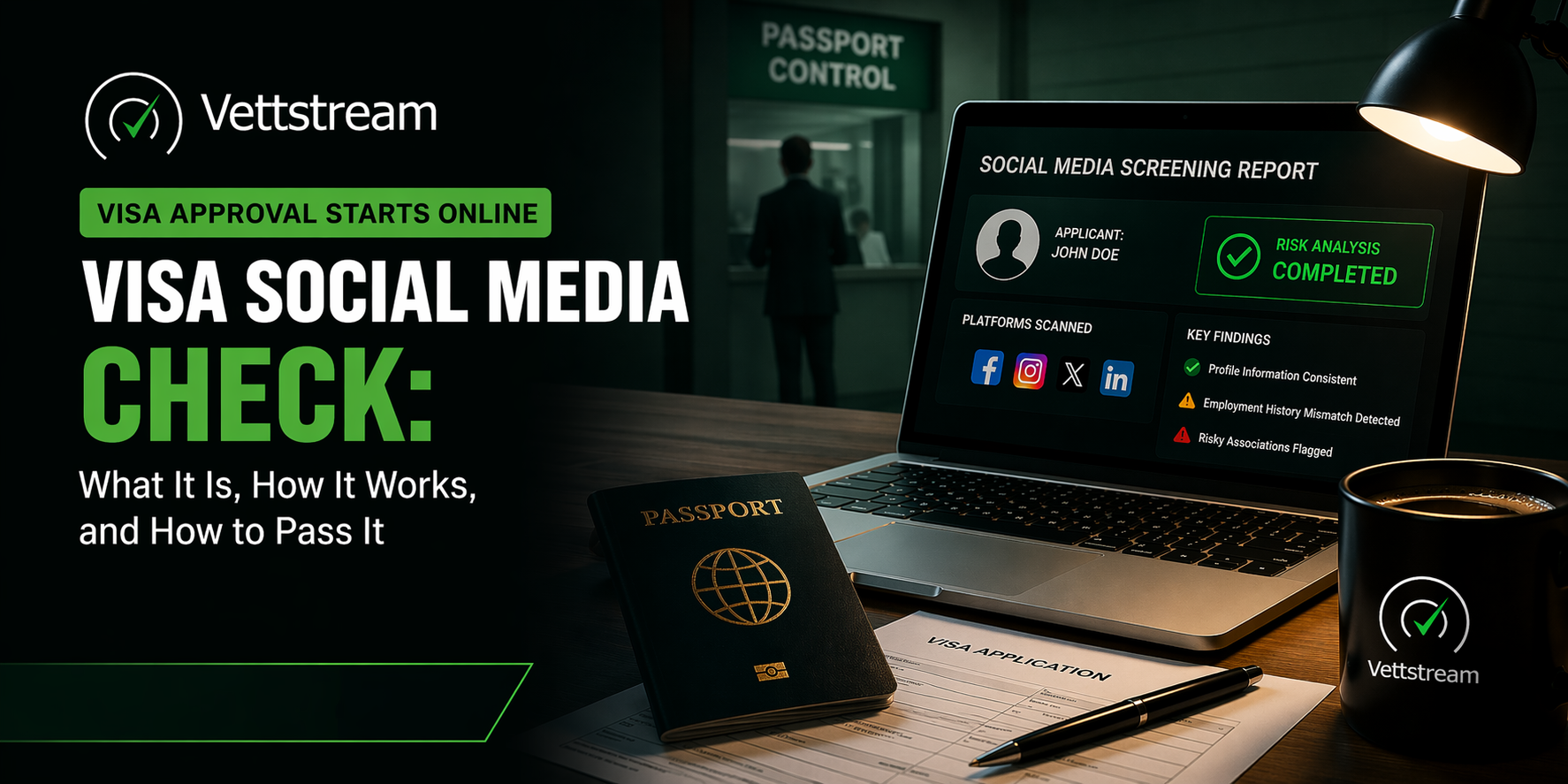
A visa social media check can destroy a visa approval even when everything else looks perfect. A visa social media check is now one of the silent reasons people get denied, and most applicants never see it coming.
You can prepare the documents, rehearse interview questions, and still lose the case because of something posted years ago. One post. One comment. One connection. That is all it takes.
As a travel agent or someone guiding applicants, this is where things get risky. You may do everything right on paper and still send your client into a situation you cannot control.
This article shows you exactly how the visa social media check works, what officers are really looking for, where most people fail, and how to fix it before it becomes a denial.
Read Also: Visa Screening Software 2026: Simplify Your Immigration Process
What Is a Visa Social Media Check
A visa social media check is when visa officers review an applicant’s online presence before making a decision.
They do not rely on documents alone anymore. They check what your client posts, who they interact with, and what they are connected to online.
This review usually covers the last five years.
It includes:
- Social media handles submitted during the application
- Public posts, comments, and reactions
- Profile details like work, school, and location
- Groups, pages, and accounts followed
The goal is simple.
They want to confirm that what your client shows online matches what they wrote in their application.
If there is a mismatch, it raises doubt. And once doubt enters the process, the application becomes weak.
Why Visa Social Media Check Matters More Now
A visa social media check is no longer a small part of the process. It has become a standard layer of screening across many visa types, and that changes how approvals happen.
In the past, visa decisions focused mostly on documents and interviews. If your paperwork was correct and your answers were clear, you had a strong chance. That is no longer enough. Today, your client’s online presence is treated as an extension of their application.
This means visa officers are not just asking, “What did you submit?” They are asking, “Does your real life match what you submitted?”
That shift is where many applications start to fail.
More visa categories are now affected by this review. Students, skilled workers, dependents, and exchange visitors can all be checked. So this is not limited to a specific group anymore. It applies broadly, and that means more people are exposed to risk without knowing it.
For you as a travel agent, this changes your responsibility. You are no longer only preparing documents. You are helping your client pass a background check that happens before and beyond the interview.
If you ignore the visa social media check, you leave a gap in your process. And that gap is where avoidable denials come from.
How Visa Officers Check Social Media
A visa social media check follows a pattern, even if it is not openly explained to applicants. Visa officers are not randomly scrolling. They are reviewing with a purpose, and each step is meant to confirm something about your client.
First, they try to confirm their identity. They check if the social media accounts actually belong to your client by comparing names, photos, usernames, and sometimes linked emails or contacts. If something does not match, it creates doubt immediately.
Next, they look at profile details. This includes work history, school, and location. These details are compared with what was written in the visa application. If your client says one thing on the form and something else appears on their profile, it raises questions.
Then comes the content review. Officers go through posts, comments, and interactions. They are not just reading individual posts. They are trying to understand patterns. They want to see how your client thinks, what they support, and how they present themselves over time.
After that, they check associations. This includes groups joined, pages followed, and the kind of accounts your client engages with. These connections can say a lot, even when the applicant has not posted anything directly.
Finally, they make a judgment. They look at everything together and decide if there is any sign of misrepresentation, risk, or inconsistency. This is where a visa social media check starts to influence the final decision, even if the applicant never knows exactly what triggered it.
What They Look For During a Visa Social Media Check
A visa social media check is not just about scanning posts. Visa officers are trying to answer one question: Can I trust this application?
They use social media to confirm or challenge what your client has already submitted.
Here are the main things they look for:
1. Mismatch With the Application
This is one of the fastest ways to weaken a case. If your client claims a job, school, or status in the application, but their social media shows something different, it creates doubt. Even small differences can lead to deeper checks.
2. Location and Travel Signals
Posts, check ins, or tagged locations can show where your client has been. If this does not align with what was declared, it raises questions about honesty.
3. Associations and Connections
Officers look at who your client follows, interacts with, or is connected to. This includes groups, pages, and communities. These associations can influence how the applicant is perceived, even without direct involvement.
4. Tone of Content
They review how your client communicates online. Posts that appear aggressive, hostile, or extreme can affect how the applicant is judged. It is not always about one post, but the overall pattern.
5. Signs of Past Visa Issues
Sometimes people reveal more than they realize. Comments about overstaying, working without permission, or misusing visas can be picked up during a visa social media check.
6. Sudden Changes in Activity
If a profile was active for years and then becomes empty just before the interview, it can look suspicious. Removing everything at once can raise more concern than leaving things as they are.
7. Consistency Across Platforms
Officers do not always look at just one platform. They compare information across multiple accounts. If details differ from one platform to another, it weakens credibility.
This is why the visa social media check is not something you can ignore or handle casually. It requires a proper review before your client ever gets to the embassy.
Common Mistakes That Lead to Visa Denials
Most problems during a visa social media check do not come from serious issues. They come from small mistakes that were ignored.
This is where many applications fail without the applicant understanding why.
Here are the mistakes that cause the most damage:
1. Not Checking Social Media at All
Many applicants focus only on documents and interviews. They never review their online presence. This leaves too many unknowns going into the embassy.
2. Leaving Old or Incorrect Information Online
Profiles that still show outdated jobs, schools, or locations can conflict with the current application. Even if the information was true in the past, it can still create confusion.
3. Ignoring Past Posts and Comments
Old posts do not disappear. Something shared years ago can still be seen and judged today. Many applicants forget this.
4. Using Multiple Accounts With Different Details
Some people have different accounts with different names or identities. When these accounts do not align, it raises questions about honesty.
5. Trying to Hide Everything Instead of Fixing It
Switching all profiles to private or hiding content does not solve the problem. In many cases, applicants are asked to make profiles public. Trying to hide information can make things worse.
6. Deleting Too Much Too Late
Removing a few problematic posts early is fine. But deleting large amounts of content right before the interview can look suspicious and trigger more checks.
7. Forgetting That Everything Is Connected
Social media is not isolated. One account can lead to another. One post can reveal more context. Many applicants think officers only see what is obvious, but the review often goes deeper.
These mistakes are avoidable. But only if you treat the visa social media check as part of the process, not something to think about at the last minute.
What Happens If Something Is Flagged
When a visa social media check finds something that does not sit right, the process does not just move forward as normal. The application enters a different path, and this is where delays and denials start to happen.
Most applicants think a visa decision is simply approved or denied. In reality, there is a middle ground where cases are held, reviewed again, and sometimes questioned more deeply.
Here is what usually happens when something is flagged:
1. The Case Is Delayed for Extra Review
The application may be placed under additional processing. This means your client has to wait longer without a clear answer. It could take weeks or even months, depending on the concern.
2. The Applicant Is Asked More Questions
During the interview, officers may bring up specific posts, comments, or details they saw online. If your client is not prepared to explain them clearly, it weakens the case immediately.
3. The Application Becomes Inconsistent
Once a doubt is introduced, everything else is looked at more closely. Even small details that would normally be ignored can now be questioned.
4. The Visa Can Be Refused
If the issue is serious or the explanation does not satisfy the officer, the application can be denied. In some cases, the reason is not explained in detail, which makes it harder to fix in the future.
This is why waiting until the interview stage is too late. By the time a visa social media check reaches this point, you are no longer preventing a problem. You are trying to explain it under pressure. And in most cases, that is when things go wrong.
How to Prepare for a Visa Social Media Check Before the Interview
The best way to handle a visa social media check is to deal with it before the embassy ever sees your client. Waiting until the interview stage puts you in a weak position. Preparing early gives you control.
Here is a simple process you can follow:
1. Collect All Social Media Accounts
Start by asking your client for every account they have used in the past five years. This includes platforms they no longer use. Missing one account can create gaps in the review.
2. Review Profile Information
Go through each profile and check details like job, school, and location. Make sure everything matches the visa application exactly. If there are differences, fix them early.
3. Scan Posts and Interactions
Look at posts, comments, and replies. Pay attention to anything that can be misunderstood or taken out of context. The goal is not perfection, but consistency.
4. Check Groups and Connections
Review the pages, groups, and accounts your client follows or engages with. These associations can influence how the application is viewed.
5. Search Their Name Online
Type your client’s name into a search engine and see what appears. This shows what a visa officer might find outside of social media platforms.
6. Fix Issues Gradually
If something needs to be corrected, do it early. Avoid making sudden, large changes just before the interview. Slow and steady updates look more natural.
7. Prepare Clear Explanations
If there is anything that cannot be removed or changed, prepare your client to explain it clearly during the interview. Confidence and clarity matter.
This process helps reduce risk, but it is still manual. And manual checks can miss things. That is where most people still run into problems, even after trying to prepare. Let me know when to proceed to the next section.
Why Most Visa Social Media Checks Still Fail
At this point, you might feel like you can handle a visa social media check manually. But this is where most people get it wrong.nThe problem is not effort. The problem is visibility. You cannot fix what you cannot fully see.
This is where manual checks fail:
You Only See What Is Obvious
When you review a profile, you notice direct posts and basic details. But you can easily miss patterns across months or years. Officers do not just look at single posts. They look at behavior over time.
You Miss Hidden Connections
One account can lead to another. One tagged post can reveal a group. One comment can show an association. These links are easy to overlook when checking manually.
You Cannot Cross Check Everything Properly
It is hard to compare social media data with application documents line by line. This is where mismatches slip through unnoticed.
You Do Not Detect Risk Early Enough
Some risks are not obvious. A post may look harmless but suggest something else when seen in context. Without a structured system, these signals are missed.
You Rely on Guesswork
Most manual reviews are based on what “looks okay.” But visa officers are not guessing. They are trained to spot inconsistencies and patterns.
This is why many applications still fail the visa social media check, even after being reviewed. It is not because no one checked. It is because the check was not deep enough.
How Vettstream Helps You Pass the Visa Social Media Check
If the problem is limited visibility, then the solution is clear. You need a system that sees more than you can. This is where Vettstream comes in.
Vettstream is built to help you pass the visa social media check before your client ever gets to the embassy.
Here is how it works in a practical way:
It Scans Social Media Across Platforms
Vettstream reviews your client’s public activity and highlights areas that may raise concern. It does not just show posts. It shows patterns, inconsistencies, and signals that matter.
It Matches Social Media With Documents
It compares what your client says in their application with what appears online. This helps you catch:
- Job differences
- School inconsistencies
- Location conflicts
It Flags Risk You Might Miss
Not every issue is obvious. Vettstream identifies subtle risks that could affect how an officer sees the case.
It Gives You a Clear Report
Instead of guessing, you get a direct report that shows:
- What is fine
- What needs attention
- What should be fixed before submission
It Helps You Act Before It Is Too Late
This is the biggest advantage. You are not reacting at the interview stage.
You are fixing issues before the visa social media check ever happens at the embassy. When you use Vettstream, you move from hoping your client passes to knowing you have reduced the risk. That difference is what separates approved applications from denied ones.
See Also: Visa Screening Software: Advancing Your Immigration Process with VettStream
Conclusion:
A visa social media check is now part of how visa decisions are made, whether your client knows it or not. Many applications fail at this stage, not because the documents were wrong or the interview went badly, but because something online created doubt.
By the time that doubt appears, it is already late. The officer has seen something that does not match, does not make sense, or raises concern, and the application becomes weak.
If you are still sending clients to the embassy without properly reviewing their online presence, you are leaving their approval to chance. That approach might work sometimes, but it will fail over time.
A better approach is simple. Review everything before the embassy does. Fix inconsistencies early. Remove risks before they affect the decision. That is how you improve approval outcomes and avoid preventable denials.
A visa social media check should be part of your process every single time, not something you think about at the last minute.
See How to Screen Your Clients Before the Embassy Does
If you want to handle the visa social media check properly and reduce denial risk, watch this:
https://go.veripass.org/vtstrm
This shows you how to review your clients’ social media and documents, spot issues early, and fix them before they affect the application.
FAQs
Do they check your social media for a US visa?
Yes, U.S. visa officers can check your social media as part of the visa screening process. Applicants are often required to provide their social media handles from the past five years, and officers may review public posts, comments, and profile details.
Does NVC check social media?
Not directly. The National Visa Center does not usually carry out detailed social media reviews itself. Its role is to process documents and prepare cases for the embassy. However, any information linked to your application, including social media details, can still be reviewed later by consular officers during the visa decision stage.
Can immigration look at your social media?
Yes, immigration authorities can look at your social media. For U.S. visas, consular officers may review publicly available posts, profile details, and interactions to verify your identity and confirm that your online activity matches your application. They are mainly checking for consistency and any content that could raise concerns about your intent or eligibility.