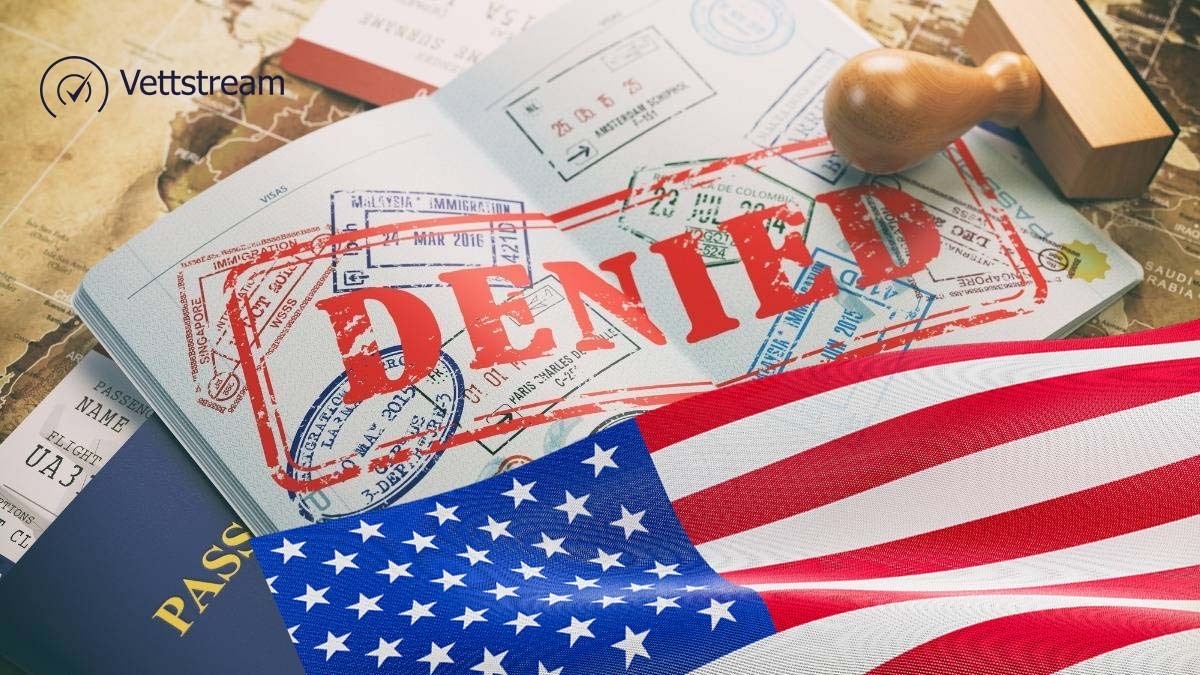
Quick Answer: If your U.S. visa was refused under 214(b), you can reapply whenever you want, but approval is more likely if you can show significant changes in circumstances or new evidence that addresses the reason for the refusal. The U.S. Department of State makes clear that 214(b) refusals are not permanent, but they also say applicants should be able to present evidence of meaningful change since the last application.
If you were refused under Section 214(b), the short answer is this: you can apply again at any time, but you should usually wait until something meaningful has changed in your situation.
The U.S. Department of State says a 214(b) refusal is for that specific application only, there is no appeal, and you may reapply if you have additional information or significant changes in circumstances. A new application and a new visa fee are required.
That official answer is simple.
The real question most people are asking is different:
Should I reapply now, or will that just lead to another refusal?
That is where many applicants get stuck. They hear that they can reapply immediately, but they do not know whether doing so is actually wise.
This guide explains what 214(b) really means, when it makes sense to reapply, when it is too soon, and how to improve your chances before your next interview.
What a 214(b) Refusal Actually Means
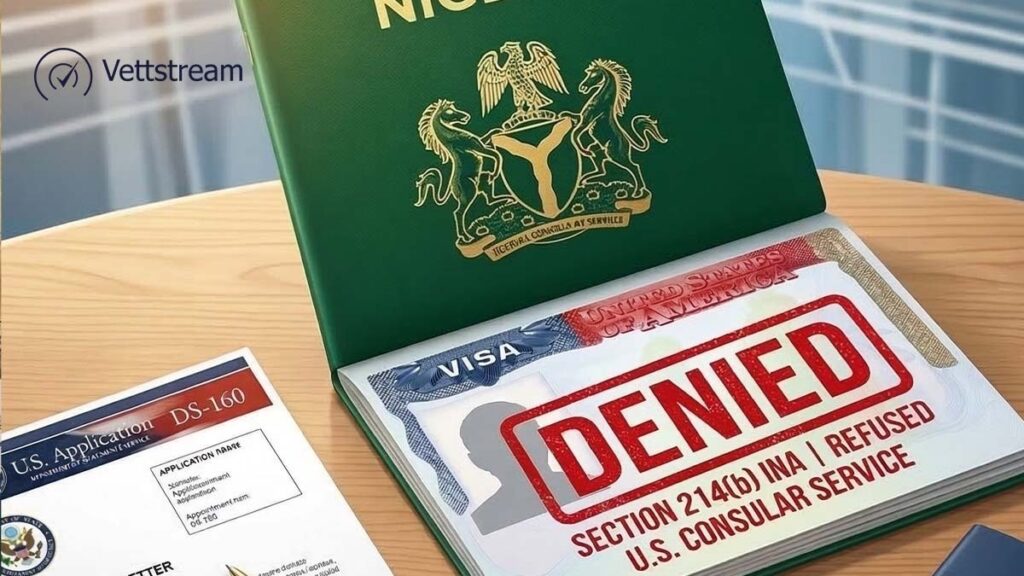
A refusal under Section 214(b) applies to non-immigrant visas. According to the Department of State, it means one or both of these things happened: you did not sufficiently show that you qualified for the visa category you applied for, or you did not overcome the legal presumption that you intended to immigrate permanently rather than visit temporarily.
In simple English, the consular officer was not convinced.
That does not automatically mean you lied. It does not automatically mean you are banned. It means that based on your application, documents, answers, and overall profile, the officer did not see enough to approve that specific application. The Department of State also notes that officers look at each case individually and consider the applicant’s circumstances, travel plans, financial resources, and ties outside the United States.
So, When Can I Apply for US Visa After Rejection 214(b)?
Legally, you can reapply as soon as you are ready to submit a new application, pay the fee again, and book another appointment. The Department of State says exactly that: after a 214(b) refusal, you must complete a new application form, pay the application fee again, and schedule a new interview.
But from a strategy point of view, the better answer is:
Reapply after the refusal reason has been addressed, not just after time has passed.
Time alone does not fix a weak case.
If nothing important has changed, a second interview often ends the same way as the first. That is why the State Department’s guidance focuses on significant changes in circumstances or additional information rather than simply waiting a number of days or months.
See Also: How to Check Visa Rejection Reason: What Embassies Don’t Tell You
There Is No Fixed Waiting Period for 214(b)
This is one of the biggest points of confusion online.
Many people search for a rule like “wait 3 months” or “wait 6 months.” But 214(b) does not come with a mandatory universal waiting period in the way people sometimes imagine. The official U.S. guidance does not set a required delay before reapplying. Instead, it emphasizes whether your circumstances have changed enough to justify a new review.
That means two people could get the same 214(b) refusal and need very different timelines before reapplying.
One person may be ready in a few weeks if they were missing key evidence and now have it.
Another may need several months because their underlying profile is still weak.
What Counts as a “Significant Change in Circumstances”?
This is the real issue.
A significant change is anything that makes your new application meaningfully stronger than the old one.
The Department of State does not publish a one-size-fits-all checklist, but its description of 214(b) gives clear clues. Officers assess ties to home country, travel plans, financial resources, and eligibility for the visa category.
Examples of strong ties listed by the State Department include your job, your home, and your relationships with family and friends.
So, meaningful changes often include things like:
You now have a more stable job or longer work history.
You have stronger proof of income or savings.
Your travel purpose is now clearer and better documented.
Your family, business, or property ties are stronger.
You can now explain your case more consistently than before.
For student and exchange categories, the State Department separately says applicants may reapply if they have additional proof of their qualifications or if circumstances have changed. Similar wording appears on the visitor visa page as well.
Read Also: U.S. Visa Processing: What Does Social Media Vetting Mean for Africans? Best 2026 Guide
When Reapplying Too Soon Is a Bad Idea
You should think twice about reapplying immediately if the only thing that has changed is your hope that a different officer will say yes.
That is usually not enough.
A fast reapplication can hurt you if:
Your DS-160 is basically the same as before.
Your financial profile has not improved.
Your reason for travel is still vague.
Your employment or home-country ties are still weak.
Your previous interview answers would likely be repeated the same way.
Remember, the fee is nonrefundable. The Department of State explicitly says the visa application fee is a processing fee and is not returned even if the visa is denied.
So before paying again, it is worth asking a harder question:
What exactly is stronger now than it was last time?
If the answer is “not much,” it may be smarter to wait and improve your case first.
What You Should Do Before Reapplying
The best reapplications are not rushed. They are rebuilt.
Start by reviewing the previous interview honestly. What seemed to concern the officer most? Was it your work, your funding, your travel purpose, your family situation, or the way your answers came across?
Then review your full profile the way an embassy might.
The State Department says visa officers consider not just the category and documents, but your broader circumstances, travel plans, finances, and ties outside the United States.
That means before reapplying, you should tighten up four things:
First, your application accuracy. Your forms, dates, employment details, and supporting documents should align.
Second, your travel logic. Your reason for travel should make sense for the visa type.
Third, your evidence of strength. Your documents should support your story clearly.
Fourth, your credibility. Your interview answers should be confident, truthful, and consistent.
This is exactly where many applicants fail. They prepare documents, but they do not prepare their full profile.
The Hidden Layer Many Applicants Miss
A 214(b) refusal is often discussed as if it is only about paper documents.
In reality, modern visa vetting is broader than that.
The State Department said in December 2025 that online presence review applies to all student and exchange visitor applicants in F, M, and J classifications, and was expanded to H-1B and H-4 applicants as of December 15, 2025.
Those applicants are instructed to set social media profiles to public to facilitate vetting. The Department also says it uses all available information in screening and vetting and that every visa adjudication is a national security decision.
That matters because many applicants focus only on the documents they hand over, while ignoring the broader consistency of their public profile.
If your application says one thing and your public footprint suggests another, that mismatch can raise questions.
This is one reason Vettstream matters in the conversation.
Vettstream is built around the reality that visa readiness is bigger than forms alone. It helps applicants review how their overall profile may appear before the next embassy decision, identify possible red flags, and go into reapplication with more clarity instead of guesswork.
Can You Appeal a 214(b) Refusal?
No. The Department of State says there is no appeal process for a 214(b) refusal. Once the case is closed, the consular section cannot take further action on that application. Your path forward is a new application, not an appeal.
That is why the quality of your next application matters so much.
You are not trying to “reopen” the old case.
You are trying to submit a stronger new one.
Should You Use the Same Embassy or Consulate?
The State Department’s general FAQ says that if you reapply after a 214(b) refusal, you still need to pay the new application fee whether you apply at the same embassy or elsewhere.
But changing location is not a magic fix.
What matters more is whether your case itself is better prepared.
The Best Practical Answer
So, when can you apply for US visa after rejection 214(b)?
You can apply again as soon as you have real improvements to show.
For some people, that may be soon after the refusal.
For others, the smarter move is to wait until they can genuinely show stronger ties, cleaner documentation, better funding, or a more credible travel purpose.
The key is not speed.
The key is readiness.
Final Thoughts
A 214(b) refusal is frustrating, but it is not permanent. The official guidance is clear: you may reapply, but your next application should be backed by additional information or significant changes in circumstances.
That is the difference between applying again and applying better.
If you treat a 214(b) refusal as a signal to strengthen your full profile, not just reprint your paperwork, your next interview can look very different.
And because visa decisions increasingly depend on broader vetting, consistency, and credibility, it makes sense to review not only your documents but your overall risk picture before you book again.
That is where Vettstream fits naturally. It helps applicants spot issues early, understand how they may appear under scrutiny, and approach reapplication with more confidence and less uncertainty. Sign up to get started today.
Frequently Asked Questions (FAQs)
Can I apply for US visa after rejection 214(b) immediately?
Yes. There is no fixed mandatory waiting period in the general State Department guidance for 214(b). But you should usually wait until you have meaningful new evidence or changed circumstances.
Do I need to pay the visa fee again after 214(b)?
Yes. A new application and a new fee are required, and the fee is non-refundable.
Is 214(b) a permanent refusal?
No. The Department of State says a 214(b) refusal applies to that specific application.
What improves my chances after a 214(b) refusal?
Stronger ties to your home country, clearer travel purpose, better financial evidence, and a more consistent overall profile all help because those are the kinds of factors officers assess in non-immigrant cases.